Supermarkets look calm from the outside, with bright lighting. Wide aisles, background music. Everything is designed to feel ordinary. Behind that calm, though, daily operations are under strain.
Grocery stores deal with more foot traffic than almost any other retail format. Hundreds, sometimes thousands, of people move through the space every day. Many are in a rush. Some are frustrated. A few are looking for opportunities to exploit distraction and volume.
That combination creates risk, not an occasional risk, but a constant risk. Unlike offices or specialist retail, supermarkets don’t get quiet hours. They don’t close between appointments. They stay open, exposed, and busy.
And that’s exactly why safety can’t be left to chance or technology alone. Dedicated supermarket security teams exist to hold the line between smooth daily operations and chaos. Without them, small issues compound.
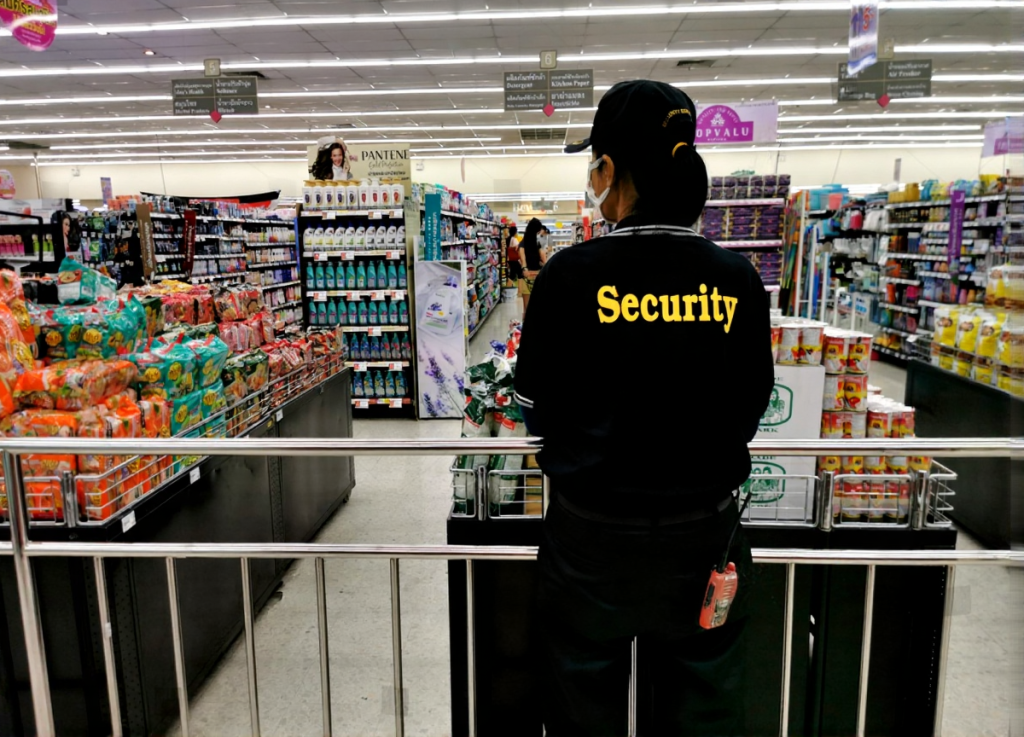
The Role of Dedicated Supermarket Security Teams in Daily Store Operations
Supermarket security teams are trained, on-site professionals whose sole responsibility is to maintain safety, order, and control inside grocery environments. They are not pulled away to cover staffing gaps. They are not unfamiliar faces rotating in and out. They are part of the store’s daily rhythm.
Because they are present every day, supermarket security teams understand how the store actually works, not how it looks on paper. They know when pressure builds, where issues usually begin, and how small problems can grow if ignored.
Maintaining a visible presence across the shop floor
A visible security presence sends a clear signal without saying a word. It tells customers the store is looked after. It tells staff they are not alone. And for would-be offenders, it introduces hesitation, often enough to stop a theft before it starts.
Unlike static guarding at entrances, supermarket security teams move. They walk aisles, change routes, and adjust their position based on activity. Peak hours look different from quiet mornings.
Delivery times bring different risks than checkout rushes. Visibility adapts to those shifts. This movement matters, and Static security fades into the background. Active presence stays noticed.
Staff also respond differently when security is clearly present. They are more confident asking for support. They are less likely to feel pressured into handling situations they’re not trained for.
Over time, this changes how the whole store operates. Visible security doesn’t disrupt shopping. When done properly, most customers barely notice it. What they do notice is the absence of disorder.
Observing behaviour patterns, not isolated actions
Lingering too long in one aisle. Repeated returns to the same shelf. Watching the staff instead of the products. Testing self-checkouts without completing purchases. These are patterns, not crimes, but they matter. Supermarket security teams are trained to notice these small signals. Not to jump to conclusions, but to build context. One action means little. Repetition tells a story.
This is where on-site experience becomes critical. Someone unfamiliar with the store won’t know what’s normal. Dedicated teams do. They recognise regular customers. They notice when behaviour doesn’t fit the usual flow.
By observing patterns instead of reacting to single moments, security teams can step in early. Often, a simple presence nearby is enough to reset behaviour. No confrontation, no disruption. Just quiet prevention. This approach protects customers, too. It reduces false accusations and avoids unnecessary escalation, keeping the store calm and professional.
Monitoring high-risk zones
Every supermarket has pressure points like alcohol aisles and blind corners near exits. These areas attract more incidents because they combine value with opportunity. Security teams focus attention where it matters most.
Self-checkouts, in particular, create challenges. Staff are busy, and the Systems flag errors late. By the time something is noticed, the customer may already be leaving. A trained security presence nearby changes that dynamic.
Alcohol aisles bring different risks: theft, confrontation, and intoxicated behaviour. These situations escalate quickly without the right response. Security teams don’t hover. They position themselves strategically. Close enough to observe. Far enough to avoid tension. Their goal is control, not confrontation.
Because they monitor these zones daily, they learn patterns. Which times are busiest? Which products are targeted? Which layouts cause blind spots? This allows stores to adjust placement and staffing over time. It’s a practical, living form of risk management.
Supporting staff during tense or aggressive situations
Arguments at checkouts. Refused refunds. Suspected thefts, Verbal abuse and these moments happen fast, and they put employees under pressure they weren’t hired for. Supermarket security teams act as a buffer.
Their presence allows staff to step back instead of escalating a situation. They take over communication calmly and professionally. Often, just having a neutral authority figure changes the tone. This support has long-term effects. Staff feel safer. Confidence improves. Turnover drops. Employees are more likely to stay in environments where they feel protected.
Security teams also understand when not to intervene aggressively. De-escalation is a skill that involves knowing when to listen. Knowing when to listen, when to redirect, and when to remove someone is learned through training and experience. The result is fewer incidents spiralling out of control, and fewer staff going home shaken.
Intervening early, before incidents escalate
The biggest value of supermarket security teams is timing. Most incidents don’t need force. They need interruption, a presence, a conversation, a moment that breaks momentum. Early intervention prevents embarrassment, injury, and escalation. It protects the business without creating scenes.
Because security teams know the store’s rhythm, they sense when something is about to tip. A raised-voice crowd is forming, a customer pushing boundaries. Acting early keeps control. This approach also protects customers.
Where the incidents occur in the store, it will become a spectacle and a quiet resolution to maintain the trust. Security isn’t about reacting after damage is done. It’s about stopping the chain reaction before it starts. That’s the difference dedicated teams make.
The Reality of Risk in Supermarket Environments
Grocery stores attract everyone. Families, elderly shoppers, Teenagers, and Commuters. People under stress. People under influence. That diversity increases unpredictability. Accessibility stock is openly displayed. Alcohol, meat, health products, baby formula, all easily concealed, all easy to resell. Pressure on staff. Employees are trained to move quickly, assist customers, and keep shelves full. They are not trained to detect theft tactics or de-escalate aggression.
According to the Reuters data, in England and Wales, shoplifting offences exceeded 530,643 incidents in the most recent recorded year, the highest level in two decades. Retail industry reporting shows grocery stores are among the most frequently targeted locations due to consistent footfall and predictable layouts.
Financially, retail theft costs UK businesses over £2 billion annually, with supermarkets absorbing a significant share. But the impact isn’t just financial. Reports of verbal abuse and physical threats toward grocery staff have risen alongside theft rates, creating safety concerns that ripple through operations. This is why supermarkets face a unique security exposure. They are public-facing, essential, and constantly busy, a perfect storm if security is treated as an afterthought.
Supermarket & Grocery Security
Security in supermarkets is not the same as security in offices, malls, or warehouses. Treating it that way is where many retailers go wrong. Start with the layout. Grocery stores are intentionally open. Long aisles limit sightlines. Promotional end caps change weekly. Seasonal displays appear overnight. These shifts create blind spots that experienced offenders notice immediately.
Then there’s behaviour. Theft in supermarkets is rarely dramatic. It’s repetitive and subtle. Basket loading. Product switching. Self-checkout manipulation. Distraction near exits. These patterns repeat daily, often by the same individuals, often unnoticed by busy staff. Without trained security observing behaviour rather than transactions, these losses quietly accumulate. This is where retail loss prevention either works or fails entirely.
Staff safety is the next fault line. Grocery employees face confrontations more often than many realise when they refuse a refund. A declined self-checkout. A suspected theft, these moments escalate quickly when there is no authoritative presence to step in.
Customers feel it too. A store that feels disorderly, tense, or unsafe doesn’t keep loyal shoppers. Parents notice. Older customers notice that footfall drops without anyone tying it directly to security gaps.
Generic commercial security doesn’t adapt well here. Cameras capture incidents after the fact. Signage is ignored, and Occasional patrols lack continuity. None of these responds to the real-time, human nature of grocery risk.
Dedicated security teams succeed because they operate inside the flow of the store. They know when queues build, when tempers shorten. When high-risk products are most exposed, they intervene quietly, often before customers realise anything was wrong.
This proactive presence changes behaviour. Theft attempts drop. Aggression reduces. Staff stop feeling isolated. In supermarket and grocery security, prevention is the outcome of familiarity, timing, and confidence. And that only comes from teams who are there every day.
How Dedicated Security Teams Support Safer Daily Operations
The difference between prevention and reaction is timing; dedicated teams act early. They don’t wait for alarms. They notice tension before it turns into confrontation. Visibility alone discourages opportunistic theft. But more importantly, trained teams know when not to be visible, when a quiet word or subtle positioning avoids escalation altogether.
They support store staff without overshadowing them. Employees work better when they know backup is close. Customers shop more comfortably when the environment feels controlled, not aggressive. This is where retail loss prevention stops being theoretical and becomes operational.
Building the Right Security Model for Supermarkets
Teams must be trained specifically for grocery environments. That includes:
- Conflict de-escalation
- Legal boundaries and appropriate intervention
- Customer communication
- Incident documentation
Clear procedures matter; Staff should know when to call security. Security should know when to observe versus intervene. Integration matters too; Security teams must work alongside store managers, not separately. Shared reporting and regular reviews ensure alignment with operational goals.
Measuring the Operational Value of Security Teams
Security value shows up in patterns, not single events.
Key indicators include:
- Reduced shrinkage levels
- Fewer repeat theft incidents
- Lower staff turnover
- Decline in abuse or confrontation reports
- Faster incident resolution
Conclusion
Supermarkets operate at speed, under pressure, and in full public view. That reality doesn’t change. What can change is how well the environment is controlled. Dedicated supermarket security teams provide consistency where unpredictability is high. They protect staff, reassure customers, and prevent losses before they spiral. For grocery retailers focused on safe, stable daily operations, security is no longer a background function. It’s part of the operational core.
FAQs
What makes supermarket security different from other retail security?
Supermarkets face higher footfall, faster transactions, and more frequent low-level theft, requiring continuous on-site presence.
Why are grocery stores high-risk environments?
Open layouts, essential goods, alcohol sales, and peak-hour congestion increase vulnerability.
Do security teams affect customer experience?
Yes, positively. A calm, controlled environment improves shopper confidence.
Can store staff manage security without trained teams?
No. Staff are trained for service, not conflict management or loss control.
How do supermarkets measure security effectiveness?
Through shrinkage trends, incident frequency, staff retention, and safety reporting.