Distribution hubs don’t sit quietly in the background. They move. Constantly. Vehicles arrive early. Pallets shift late. Temporary staff rotate in and out. Decisions are made fast, often under pressure. That speed is what keeps supply chains alive, but it’s also where security exposure grows.
Most security risks in distribution hubs don’t wait for closing time. They surface mid-shift, during loading windows, or while teams are stretched thin. Without distribution hub monitoring in place during live operations, awareness often arrives too late, and delayed awareness always leads to delayed response.
That’s where real-time monitoring changes the equation. Not as a passive set of cameras, and not as a compliance tick-box, but as a live control layer that keeps pace with how distribution hubs actually operate. When visibility matches movement, security stops reacting after the fact and starts supporting the business as it runs.
Why Distribution Hub Monitoring Matters in Active Sites
Distribution hub monitoring matters most when work is active and fast across the site. A busy hub runs all day and often all night. Goods move in and out without pause. People walk between zones while vehicles load and leave. Trucks line up at bays while staff prepare the next shift. Each task needs care and steady watch to keep the flow safe and smooth.
When no one sees what is happening in real time, small issues can grow into large problems. A missed check at a gate or a delay at a bay can slow the full site. One late call can hold many orders. When work is quick, even a small gap can spread across the day. Real-time view helps teams act early and keep work on track. It allows staff to fix issues while they are still small and easy to manage. This keeps people safe and helps goods move without delay.
The Real Work Inside Busy Hubs
A distribution hub handles many tasks at once from morning to night. Boxes move on belts and through storage areas. Forklifts cross paths with staff who pick and pack goods. Drivers wait at loading bays while new stock arrives. Staff change shifts and new workers may join during busy hours. Each move adds speed and pressure to the day.
These risks do not appear because people are careless. They appear because work must move fast to meet demand. When orders rise, teams rush to keep pace. When volume grows, checks may feel harder to maintain. Old ways of watching cannot keep up with this speed. Reports written at the end of a shift come too late to help. Saved video can show what went wrong, but it cannot stop the issue while it happens. On a fast site, late news does not protect work or people. Teams need a clear view and quick action at the same time.
Keeping Daily Hub Work Clear and Steady with Distribution Hub Monitoring
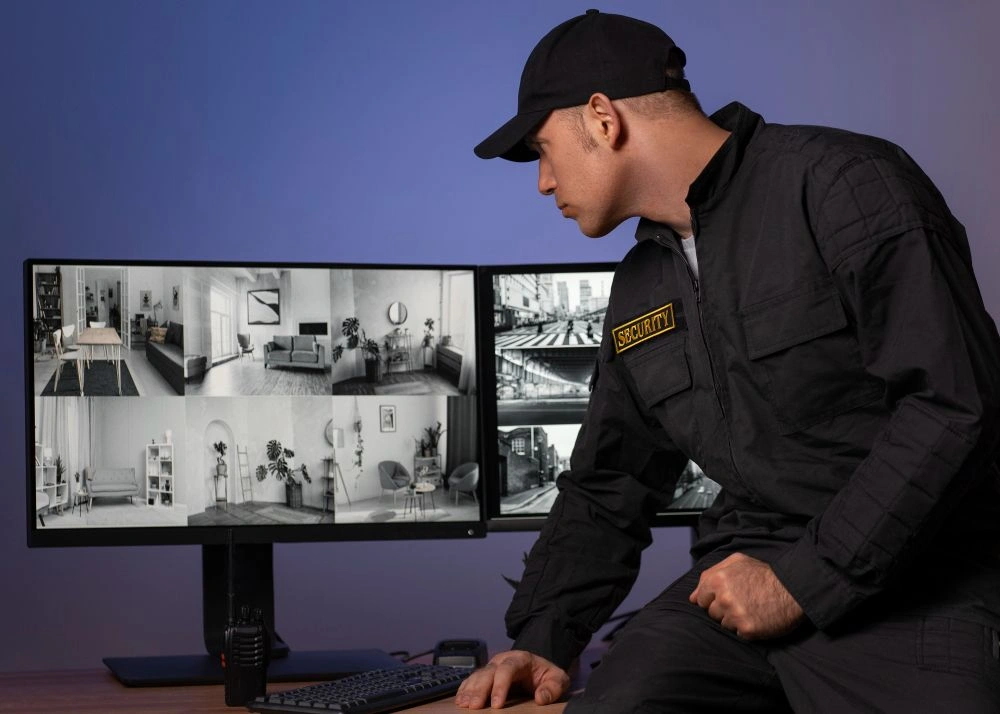
Strong distribution hub monitoring keeps daily work clear and steady across the full site. A busy hub has many zones that run at the same time, and each zone needs care and close watch. When teams can see live activity as it happens, they can guide drivers, support staff, and handle issues before they grow. A clear view across loading bays, storage areas, and entry points helps work move without stress or delay.
Live monitoring also helps all teams stay connected during the day. Security staff, site leads, and floor teams share the same view of what is taking place. This shared view helps reduce confusion and keeps tasks simple to manage. When everyone sees the same picture, they can act with speed and calm. Small problems are handled early, and work continues without long stops or risk.
A busy hub depends on time, trust, and steady control. When staff know that work is being watched in real time, they stay focused and feel supported. Goods move with fewer pauses, drivers follow clear routes, and staff feel safe in their roles. Over time, strong and steady monitoring becomes a normal part of daily work that keeps the hub running in a smooth and reliable way.
How Distribution Hub Monitoring Enables Immediate Intervention
Real-time alerts highlight movement that doesn’t align with what should be happening at that point in an operation, such as doors opening out of sequence, vehicles moving against expected flow patterns, or access occurring in areas where it shouldn’t.
These signals are not traditional alarms designed to halt activity; they act as prompts for human teams, allowing teams to assess situations quickly and decide whether intervention is needed. Unlike passive recording, which only explains events after they unfold, active monitoring creates options while there is still time to influence the outcome.
In active logistics environments, risks often emerge through vehicle movement and shared spaces, which is why guidance on managing live transport risks in warehouses, such as the approach outlined by the UK Health and Safety Executive (HSE), reinforces the importance of real-time visibility and early intervention while operations are in motion.
Minutes often make the difference between a minor correction and a wider operational disruption. An unauthorised vehicle can be redirected before it blocks a loading bay, a process deviation can be addressed before it spreads across a shift, and internal misuse can be challenged before it escalates into a larger incident. This is not surveillance for its own sake; it is situational awareness applied at the right moment, when action still has practical value.
Security as an Operational Support Function
When monitoring is done properly, it doesn’t sit outside operations. It reinforces them. Live oversight helps logistics teams keep the flow steady. It reduces the need for disruptive investigations. It gives supervisors confidence that issues will be spotted early, not after something goes wrong.
Crucially, it improves coordination. Monitoring teams don’t replace on-site staff; they back them up. A call comes in with context, not guesswork. Response becomes targeted, calm, and proportionate.
Security stops being a barrier and starts acting like infrastructure, quietly present, rarely noticed, but immediately missed when it’s gone.
Reducing Downtime Through Faster Awareness
Downtime in distribution hubs rarely announces itself. It creeps in through small delays, repeated interruptions, and unresolved incidents.
Real-time awareness interrupts that pattern. Early visibility prevents small disruptions from turning into missed dispatches or delayed collections. It limits the ripple effect across transport schedules and downstream partners.
Service-level commitments depend on consistency. Proactive monitoring protects that consistency by keeping control during motion, not after loss, not after disruption, but while there’s still room to act.
In active environments, security isn’t about guarding stillness. It’s about maintaining control while everything is moving.
Key Components of an Effective Real-Time Monitoring Setup
A real-time monitoring setup doesn’t need complexity to be effective. It needs clarity. Live video feeds provide the foundation, but they only add value when viewed with intent. Centralised monitoring points ensure oversight isn’t fragmented across teams or shifts. Someone, somewhere, always sees the bigger picture.
Alert escalation workflows matter just as much. Not every alert needs escalation, but every alert needs ownership. Clear thresholds prevent both overreaction and silence.
Integration with on-site teams closes the loop. Monitoring without response is noise. Response without context is guesswork. When the two align, decisions become faster and more accurate. The goal isn’t constant intervention. It’s readiness. Knowing that when something drifts off-course, visibility already exists, and action can follow without delay.
Operational Security Benefits Beyond Theft Prevention
Real-time monitoring is often framed around loss, but its operational benefits run wider. Movement becomes safer when blind spots shrink. Vehicle and pedestrian routes are easier to manage when oversight is continuous. Near-misses are noticed before they become incidents.
Accountability improves quietly. Clear visibility reduces ambiguity around who was where and when, without creating a culture of blame. Incident timelines become clearer, shorter, and easier to resolve.
Internal friction drops, Teams spend less time disputing what happened and more time correcting course. And perhaps most overlooked: staff confidence improves. People work differently when they know support exists in the background, watching the flow, not the individual. That confidence stabilises shifts, especially during peak periods.
When Distribution Hubs Gain the Most Value from Real-Time Monitoring
During peak dispatch windows, when pressure is highest, real-time awareness prevents small missteps from stalling output. In multi-tenant hubs, shared spaces demand neutral oversight that doesn’t favour one operator over another.
High contractor turnover introduces uncertainty. Monitoring provides continuity where personnel change frequently. And in 24/7 operations, it ensures consistency across shifts, not just during core hours. In these environments, monitoring isn’t an upgrade. It’s a stabiliser.
Integrating Monitoring Without Disrupting Operations
Poorly introduced security creates resistance. Effective monitoring avoids that trap. Deployment should be incremental and non-intrusive. Systems align to existing workflows instead of forcing new ones. Visibility focuses on zones and movement, not individuals.
Clear communication matters. When staff understand that monitoring supports safety and flow, not micromanagement, acceptance follows. Transparency builds trust, and trust sustains long-term effectiveness. Operational security only works when people don’t feel watched, but supported.
Preparing Distribution Centres for Scalable Security Growth
Distribution centres rarely stay static volumes grow, layouts evolve. Operating hours stretch. Security planning should anticipate that growth. Scalable monitoring avoids expensive rebuilds later. It adapts to complexity without starting from scratch.
The aim isn’t to predict every future risk. It’s to ensure visibility can expand alongside operations, maintaining control as the environment becomes more demanding. Security that grows with the business stays relevant. Security that doesn’t eventually get bypassed.
Conclusion
Distribution hubs move all day and night. Goods come in and go out without long stops. People work fast to meet time and demand. When work moves this quickly, small issues can grow if no one sees them early. Late action can slow the whole site. Clear and steady watch helps teams act at the right time and keep work safe.
Distribution hub monitoring supports daily work without getting in the way. It helps teams see what is happening across the site while tasks are still in progress. When teams have a clear view, they can make simple and quick decisions. They can guide drivers, support staff, and handle risks before they grow into larger problems. This keeps goods moving and helps people work calmly and focus.
As hubs grow and change, strong monitoring helps them stay in control. It is not only about watching for loss. It is about keeping work smooth and safe while everything is moving. When monitoring becomes part of a daily routine, teams feel supported and ready. Work flows better, risks stay low, and the site runs with steady control each day.
Frequently Asked Questions
What is real-time monitoring in a distribution hub?
It’s live oversight of movement, access, and activity that allows immediate awareness and response while operations are running.
How does distribution hub monitoring differ from standard CCTV?
Standard CCTV records. Real-time monitoring observes, assesses, and supports action as situations unfold.
Can real-time monitoring work alongside on-site security teams?
Yes. It strengthens on-site teams by providing context, early alerts, and coordinated response, not replacement.
Does real-time monitoring slow down operations?
When aligned correctly, it reduces disruption by catching issues early, before they interrupt flow.
Which distribution hubs benefit most from real-time monitoring?
High-volume, multi-tenant, 24/7, or fast-changing hubs see the strongest operational impact.